

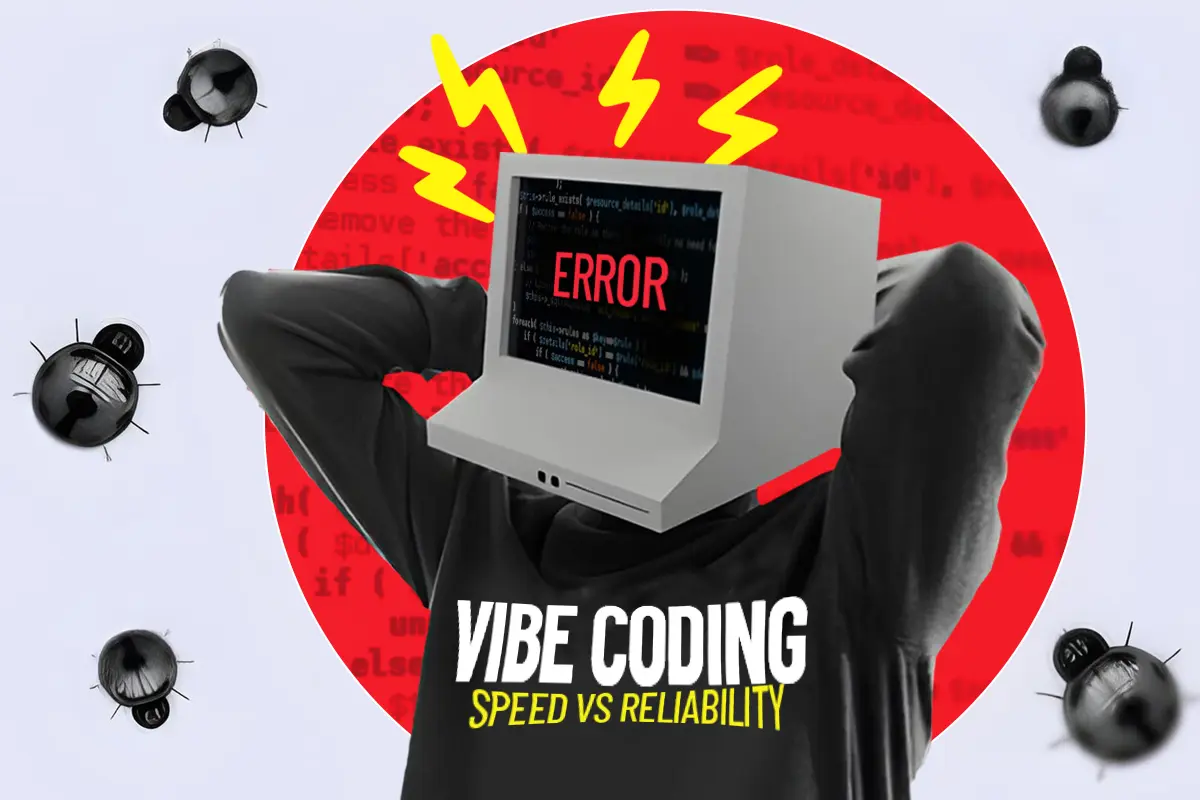
As AI assistants rapidly generate complex applications, the practice of vibe coding promises unprecedented velocity. However, deploying unreviewed AI generated code risks catastrophic security failures and immense technical debt. Discover how enterprise leaders can balance rapid prototyping with robust governance to safely integrate AI driven development.
Introduction
The speed at which software is built in the new age era is staggering, largely driven by developers utilizing AI to generate entire applications through a process known as vibe coding. While this promises incredible velocity, experts warn that pushing unreviewed AI generated code into production could lead to catastrophic explosions, akin to a digital Challenger disaster. The strategic question for enterprise leaders is no longer whether to use AI assistants, but how to deploy them without compromising foundational security.
The Deceptive Allure of Zero Handwritten Code
The ability of AI models to produce code that successfully compiles has jumped to 90 percent. This success rate often tempts startups and enterprises alike to rely entirely on AI. For instance, the startup Enrichlead launched with zero handwritten code, only to be shut down days later due to newbie level security flaws that allowed unauthorized data access.
While vibe coding is excellent for throwaway prototypes where feasibility is being tested, applying it blindly to production systems introduces severe vulnerabilities. In fact, research shows that 20 percent of vibe coded applications contain serious configuration errors or security flaws.
Data, Technology, and Business Alignment: The Missing Industry Depth
AI models are trained to find the shortest path to solve a task, which is rarely the most secure. More importantly, AI lacks the necessary industry context. An AI assistant does not inherently understand complex financial rounding rules or the stringent logging requirements mandated by healthcare regulations.
To align AI development with business requirements, organizations must mandate the use of prebuilt, battle tested components rather than allowing AI to invent critical security logic from scratch
Risk, Governance, and Scalability Considerations
Scaling vibe coding introduces profound risks across the development pipeline. Vulnerabilities in the AI platforms themselves, such as prompt injections in tools like Cursor or Anthropic servers, allow attackers to access developer machines and steal sensitive data.
Additionally, inexperienced users often deploy vibe coded apps with dangerous misconfigurations, such as leaving critical databases exposed to the public. To mitigate these risks, enterprises must enforce robust governance, including automated security scanning, detailed security guidance in AI system prompts, and mandatory human code reviews
Organizational and Cultural Perspective: The Evolving Engineering Role
As AI takes over basic coding tasks, the role of the engineer becomes far more strategic. Developers must transition from typists to architects and reviewers, focusing on orchestrating AI agents and validating their output. Leveraging strongly typed languages like Rust can also provide a distinct advantage, as the compiler helps catch incorrect logic before it reaches production.
Organizations must build a culture where security is non negotiable, ensuring that AI is used to assemble validated components rather than replacing human oversight.
The Speed versus Stability Dilemma
Vibe coding is undeniably great for velocity, allowing teams to push boundaries and rapidly iterate during the Minimum Viable Product or MVP stage. However, there is a massive difference between generating a functional prototype and deploying an enterprise grade application. While AI coding works incredibly well for testing feasibility, it frequently breaks at scale.
As applications grow, the blast radius of unreviewed AI code expands exponentially. What starts as a fast, disposable codebase suddenly becomes a fragile foundation that cannot support secure, long term stability. Enterprises must recognize that while speed is critical for innovation, stability and deep architectural understanding are required for survival.
Where Vibe Coding Works and Where It Fails
To safely navigate this new age era of development, enterprise leaders must define strict boundaries for AI assistants. Based on current industry analysis, here is a clear breakdown of where vibe coding shines and where it poses severe risks:
Where It Works (The MVP and Scaffolding Stage):
- Throwaway Prototypes: Excellent for quickly testing feasibility and market fit, provided the code is planned for a proper rewrite later.
- Targeted Editing: Highly effective for making small, easily reviewable changes to existing, well understood code.
- Constrained Implementation: Useful when operating within strict constraints, such as writing against prebuilt tests or using validated libraries with predictable behavior.
- Structural Scaffolding: Safe to use for generating basic structural code around known, secure, and battle tested components.
Where It Fails (The Scaling and Production Stage):
- Enterprise Codebases from Scratch: Highly dangerous if building entire applications from scratch that are intended for long term production rather than being treated as disposable.
- Novel Security Logic: AI should never invent security mechanisms or critical logic that cannot be easily verified; it must rely on established, validated libraries instead.
- Scaling Legacy Systems: When AI adds features to large, older codebases, it often scans the existing code and copies vulnerable patterns from the historical security backlog, treating those flaws as approved patterns.
Engenia’s Perspective
We recognize that vibe coding represents a powerful evolution in prototyping, but it is not a substitute for disciplined software engineering. In the new age era, speed must not come at the expense of security. We advocate for a Secure by Design approach where AI is utilized within strict architectural constraints. By restricting AI to scaffolding around validated libraries and requiring rigorous human oversight for critical logic, organizations can harness the velocity of vibe coding while protecting their enterprise assets.
The future of software development will undoubtedly involve AI agents writing substantial portions of our codebases. However, treating AI as an infallible developer rather than a powerful assistant is a highly risky approach. Enterprises that thoughtfully integrate vibe coding with strong governance, comprehensive testing, and expert human review will capture the competitive advantage. Those who blindly trust AI generated code will eventually face the catastrophic cost of their technical debt.


