

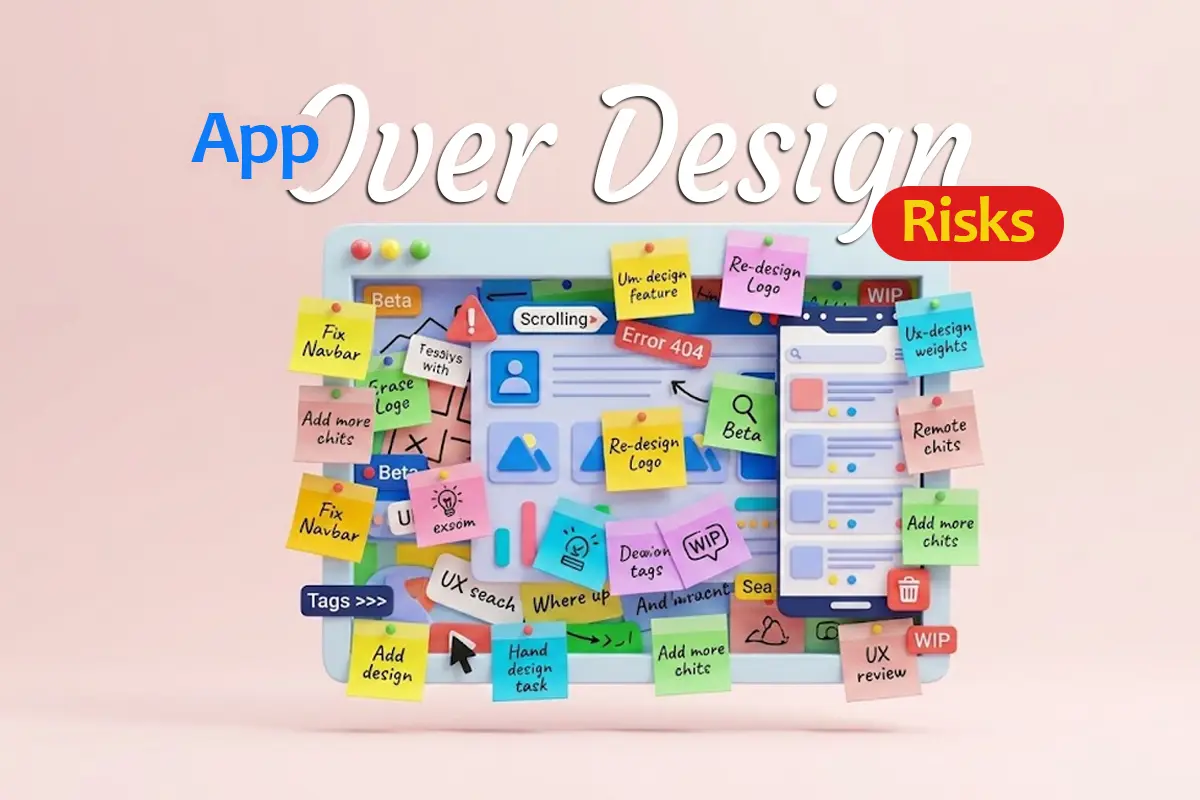
Digital applications are facing a massive usability crisis driven by overdesign. As platforms sacrifice speed for bloated features and complex animations, users are drowning in cognitive overload. Discover why prioritizing frictionless utility and strategic subtraction is the ultimate competitive advantage for modern enterprise leaders.
The Friction of Modern Overdesign and Cognitive Overload
the digital landscape is facing a massive usability crisis driven entirely by app overdesign. What was once a spartan time of lightweight and minimalist web interfaces has rapidly evolved into a chronicle of over the top design, where basic usability and speed are sacrificed to pack in bloated features, complex navigation, and unnecessary animations. Overdesign occurs when visual elements or complex features are prioritized over sheer functionality, significantly increasing cognitive load and forcing users to guess where to look or click next. This phenomenon is glaringly obvious when looking at popular applications that have strayed from their core utility. For example, Spotify transitioned from a simple music player into a cluttered platform filled with algorithmic video feeds and a Smart Shuffle feature that frequently biases the platform’s own content over actual user preferences. Similarly, LinkedIn evolved from a straightforward resume platform into a complex maze of endless notifications, distracting stories, and complicated navigation menus.
Even basic utilities like WeatherBug or food delivery apps such as Zomato and Swiggy suffer heavily from feature stuffing; they bury straightforward tasks like checking the temperature or reordering a meal beneath massive sidebar ads, loyalty games, and aggressive pop ups. This relentless push for visual complexity often results in severe performance bottlenecks, causing apps to lag and ultimately leading to higher uninstall rates as users abandon platforms that fail to effortlessly help them complete tasks.
The Business Drivers Behind the Digital Bloat
The critical question enterprise leaders must ask is why companies continue to push these complex redesigns even when users actively complain and explicitly state they prefer the older, simpler versions. The reality is deeply rooted in corporate governance, product management cycles, and the immense pressure to continuously demonstrate growth.
Designers and product managers often feel compelled to justify their roles, and simply stating that an application was kept exactly the same does not appease shareholders who demand constant innovation in quarterly reports. Furthermore, there is a constant temptation for web developers to play with shiny new frameworks or chase passing aesthetic trends, such as the bento box design, which might look beautiful in a portfolio but frequently suffers from extremely poor readability.
This cycle of continuous redesign is also driven by the strategic desire to capture new customer bases, sometimes forcing businesses to completely ignore the feedback of established users for the good of the overall corporate bottom line. Interestingly, some theorize that continuously changing interfaces subconsciously conditions users to adapt to technological shifts, essentially preventing massive tech support panics down the line. However, this relentless pursuit of complexity often completely ignores the actual user experience; for instance, heavily overdesigned websites with massive parallax scrolling features not only frustrate users and waste their time, but they also contribute to higher CO2 waste, highlighting the profound need for a return to eco friendly, minimalist digital consideration.
The Path Forward: Subtraction and Strategic Minimalism
To survive this overdesign epidemic, the most successful enterprises are pivoting back to fundamental product thinking and strategic subtraction. The future of software design in the new age era relies heavily on reducing friction rather than simply adding more artificial intelligence features or flashy animations. Effective user experience now demands simplicity with a clear visual hierarchy, visible affordances, and smart, subtle micro interactions rather than massive involved animations that the average user completely ignores. We are already seeing a massive rise in Brutalism web design, which favors large imagery, big text, and highly utilitarian functionality to completely cut through the digital noise.
The ultimate goal is to make interfaces function seamlessly first, and only then focus on making them aesthetically pleasing. This requires designers to successfully separate passing visual trends from what actually works, acknowledging that an ugly but functional site like Craigslist can perform exceptionally well because users know exactly how to get what they want without working hard for it. By leveraging artificial intelligence as a background productivity tool to streamline tasks rather than using it to generate overwhelming front end features, organizations can build robust products that truly respect the user’s time, attention, and cognitive capacity.
The Portfolio Trap and the Hidden Costs of Visual Vanity
A major catalyst for this relentless overdesign epidemic is the profound disconnect between what looks impressive in a designer portfolio and what actually works for the end user. Many digital agencies and internal product teams fall into the portfolio trap, creating overly complex layouts, massive parallax scrolling effects, and unnecessary animations simply to justify massive project budgets and impress stakeholders. Clients frequently cheer for these flashy, highly involved productions before ever checking the actual performance metrics, completely ignoring that the average user session often lasts barely a minute. However, these purely aesthetic choices carry severe hidden costs for the enterprise. Beyond introducing massive performance bottlenecks and causing applications to severely lag, these visual vanity projects create significant accessibility barriers.
Users with cognitive or visual disabilities often find themselves completely overwhelmed and paralyzed by running text, massive typography, and unpredictable scrolljacking navigation models. Furthermore, enterprise leaders must recognize that heavy, overdesigned platforms actively contribute to higher carbon emissions and CO2 waste, directly contradicting the growing corporate mandate for eco friendly digital sustainability. True enterprise value in the new age era is not created by designing the most visually complex interface merely to show off technical skills to other designers. Instead, the competitive advantage lies in architecting inclusive, lightweight, and incredibly efficient systems that respect the cognitive capacity of the user and the environmental impact of the platform.
Engenia’s Perspective
At Engenia, we recognize that true digital innovation in the new age era is not about how many features you can cram into a single screen, but about the profound clarity of your architecture. We advocate for a disciplined, secure by design approach where applications are built strictly around user intent and functional necessity. By ruthlessly eliminating bloated features, resisting unnecessary aesthetic trends, and relying on strategic orchestration, enterprise leaders can deliver highly resilient platforms that drive genuine business value.
The competitive advantage today belongs to organizations that prioritize frictionless utility over visual vanity. Are you ready to streamline your enterprise applications and eliminate digital bloat? Contact our strategic technology team today to discover how to architect incredibly efficient, user focused digital ecosystems.


